
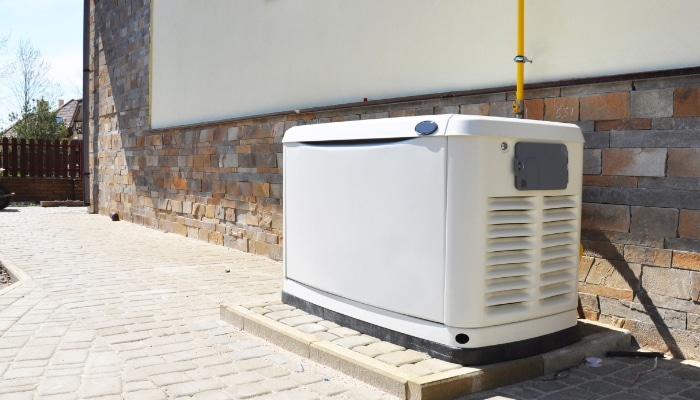
Most homeowners who call us about a generator ask the same question within the first two minutes: how big does it need to be?
It's a fair question — and an important one. Buy too small and your generator trips under load the first time a storm rolls through. Buy too big, and you've spent thousands more than you needed to. Getting the size right is the difference between a generator that quietly does its job for 20 years and one that causes headaches from day one.
The good news is that sizing a standby generator isn't as complicated as it sounds. Here's how we walk homeowners through it every day in Cartersville, Acworth, Canton, and the rest of Northwest Georgia.
First: What Does Generator Size Actually Mean?
Generator size is measured in kilowatts (kW) — the amount of electrical power the unit can produce at any given moment. The higher the kW rating, the more your generator can run at once.
Most whole-home standby generators for residential use fall in the 10kW–26kW range. Here's a rough breakdown of what those numbers mean in real terms:
- 10–13 kW — Powers essential circuits only: lights, refrigerator, a few outlets, and a window AC unit. Good for smaller homes or homeowners who just want the basics covered.
- 16–20 kW — Powers most of a mid-size home, including central HVAC, kitchen appliances, and key living spaces. The most common range for homes between 1,500–2,500 sq ft.
- 22–26 kW — True whole-home coverage for larger homes. Runs everything — HVAC, electric range, water heater, EV charger, workshop — simultaneously.
For context, a central air conditioning unit alone typically draws 3,500–5,000 watts just to run (and up to 9,000 watts on startup). That's why sizing matters — you need headroom above your running load, not just enough to cover it. The Electrical Generating Systems Association (EGSA) recommends sizing for at least 25% above your calculated load to account for startup surges.
Step 1: Decide What You Want to Power
The fastest way to narrow down your generator size is to decide upfront whether you want essential coverage or full-home coverage. These are two genuinely different products and two genuinely different price points.
Essential Coverage
This means powering the circuits that keep your household safe and functional during an outage — but not everything at once. Think:
- Refrigerator and freezer
- Lights throughout the home
- A few key outlets
- One HVAC zone (heating or cooling)
- Well pump (if applicable)
- Medical equipment
A 10–13 kW generator with a load-managed transfer switch can cover this for most homes. It's the more affordable entry point and it's enough for the majority of outages, which last less than 24 hours.
Full-Home Coverage
This means the power goes out and nothing in your house changes. The HVAC keeps running, the oven works, the washer finishes its cycle, and you don't think about it again until the lights come back on.
For most homes in the 2,000–3,000 sq ft range, that means a 22kW generator. Larger homes, homes with electric ranges, or homes with electric water heaters will want to look at 24–26kW.
Not sure which approach fits your home? The U.S. Department of Energy has a helpful overview of backup power considerations, and our team can walk through a full load calculation with you during your consultation.
Step 2: Calculate Your Home's Electrical Load
If you want to get more precise — or if you're trying to choose between two generator sizes — a load calculation gives you a real number to work with instead of a guess.
Here's how to do a basic version yourself:
- List every appliance or system you want to power during an outage
- Find the running wattage for each (usually printed on the label or in the manual)
- Add them all up — that's your running load in watts
- Divide by 1,000 to convert to kilowatts
- Add 25% to account for startup surges
- That's your minimum generator size
Example: A 2,200 sq ft home with central HVAC (4,000W running), refrigerator (150W), lights (500W), and a few outlets (300W) has a running load of roughly 4,950W — call it 5kW. Add 25% for surge headroom and you're looking at a minimum of 6.25kW just for those systems. Factor in a water heater, a second HVAC zone, or an electric range and that number climbs fast.
Generac's online home standby sizing calculator is a good tool for getting a ballpark figure before your consultation. That said, nothing replaces a licensed electrician doing a proper load calculation against your actual electrical panel — especially if your home is older or has had additions over the years.
Step 3: Factor In Your Home's Specific Situation
Beyond raw wattage, a few other things affect which generator is right for your home.
Natural Gas vs. Propane
Standby generators run on either natural gas (connected to your utility line) or liquid propane (stored in a tank on your property). If you're in a part of Bartow County or Cherokee County that doesn't have natural gas service, propane is your option — and the generator sizing stays the same, but you'll want to factor in tank size and refill scheduling during extended outages.
Your Electrical Panel
An older or undersized electrical panel can limit what your generator can actually power, regardless of its kW rating. If your home is running on a 100-amp panel and you're planning to add a 22kW generator, a panel upgrade may be part of the conversation. We check for this during every consultation.
Whether You Have or Plan to Add an EV Charger
Level 2 EV charger installation adds 7,200–9,600 watts of potential load. If you have an EV or are planning to get one, size up accordingly — or plan to manage EV charging separately during an outage.
Medical Equipment
If anyone in your household depends on oxygen concentrators, CPAP machines, dialysis equipment, or any other medical device, that load needs to be calculated separately and your generator sized to guarantee it never gets interrupted. This is non-negotiable — size for what you need, not what's cheapest.
Common Sizing Mistakes to Avoid
Sizing based on the square footage alone
Square footage is a starting point, not a final answer. Two 2,000 sq ft homes can have dramatically different electrical loads depending on whether they have gas or electric appliances, one HVAC zone or two, a hot tub, or a workshop. Always calculate load, not just footprint.
Forgetting about startup watts
Motors — HVAC compressors, well pumps, refrigerators — draw significantly more power on startup than they do while running. A 4,000W air conditioner might surge to 8,000W or more when it kicks on. If your generator can't handle that surge, it will trip. Your sizing needs to account for the largest motor in your home starting up.
Assuming bigger is always better
Oversized generators run inefficiently. A generator that's significantly larger than your load runs at low capacity most of the time, which causes carbon buildup and shortens the engine's life. Size for your actual needs plus reasonable headroom — not for the maximum possible load of the home.
What Size Generator Do Most Northwest Georgia Homes Need?
Based on what we install across Cartersville, Acworth, Canton, Marietta, Kennesaw, and the surrounding area, here's what we see most often:
- Homes under 1,500 sq ft with gas appliances: 13–16 kW
- Homes 1,500–2,500 sq ft with central HVAC: 18–22 kW
- Homes 2,500–4,000 sq ft or homes with electric appliances: 22–26 kW
- Large homes, homes with pools/hot tubs, or commercial properties: 26kW+
The 22kW Generac is the most common install we do — it covers the vast majority of Northwest Georgia homes completely without oversizing. But every home is different, and the only way to know for certain is to do a proper load calculation.
Not Sure? We'll Figure It Out With You
Sizing a generator correctly takes more than an online calculator — it takes someone who's looked at your panel, walked through your home, and understands what matters to your family. That's exactly what we do during our complimentary consultation.
1 Best Electric is a Generac authorized dealer serving Cartersville and all of Northwest Georgia. We install, service, and maintain standby generators for homeowners across Bartow, Cherokee, Cobb, Floyd, and Paulding counties.
Ready to find the right generator for your home? Schedule your consultation online or call us at 470-309-6996 . We'll make sure you get exactly what you need — nothing more, nothing less.
Yes — if you install a larger transfer switch upfront, you can add circuits over time without replacing the generator itself. It's worth planning for this during the initial install rather than retrofitting later.
The kW rating doesn't determine runtime — your fuel supply does. A natural gas generator can run indefinitely as long as the utility line has pressure. A propane generator runs until the tank is empty, so tank size matters more than generator size for extended outages.
It will trip the breaker and shut down — same as a circuit in your home. It won't damage the generator, but it also won't power your home until you reduce the load and restart it. During a storm at 2am, that's not a situation you want to be in.