
Cold winter weather does more than drive up your heating bill. It can also put unexpected strain on your home’s electrical system. In Georgia, January is one of the busiest months for electrical service calls due to increased heating use, space heaters, and higher overall power demand.
Whether your home relies on a heat pump, electric furnace, or supplemental heaters, winter heating systems can significantly increase electrical load. Understanding how this happens can help prevent tripped breakers, flickering lights, and potential electrical hazards.
Why Cold Weather Pushes Your Electrical System to Its Limit
During winter, heating equipment runs longer and harder than at any other time of year. This sustained use pulls more electricity through your electrical panel, circuits, and wiring.
Common winter factors that increase electrical load include:
- Heat pumps switch to auxiliary or emergency heat during colder temperatures
- Electric furnaces draw high amperage during long run cycles
- Portable space heaters plugged into standard outlets
- Increased use of electric blankets, heated mattress pads, and additional lighting
- Holiday leftovers, like outdoor lighting or garage heaters still in use
In Georgia homes, where heat pumps are common, colder mornings often trigger auxiliary heat. This backup heat relies on electric resistance heating, which consumes significantly more electricity and can overload circuits if the system is already near capacity.
Signs Your Electrical System Is Struggling in Winter
When heating demand spikes, your electrical system often shows warning signs before a serious problem occurs.
Watch for these common winter electrical issues:
- Circuit breakers tripping when the heat turns on
- Flickering or dimming lights during heating cycles
- Warm outlets or a burning smell near electrical panels
- Buzzing sounds from breakers or electrical equipment
- Space heaters are causing outlets to shut off or breakers to trip
These symptoms suggest your system may be overloaded or outdated, especially in older Georgia homes that were not designed for modern electrical demand.
Why Electrical Panels Matter More in Winter
Your electrical panel acts as the control center for your entire home. During winter, it must safely distribute higher electrical loads without overheating or failing.
Homes with older or undersized panels are especially vulnerable when heating systems demand more power. If your panel cannot handle the increased load, it may trip breakers repeatedly or fail to protect your wiring properly.
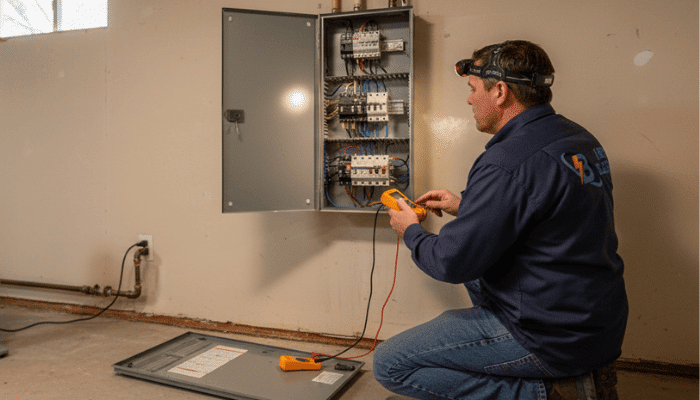
An electrical panel inspection can identify:
- Overloaded or undersized breakers
- Improperly labeled circuits
- Loose or aging connections
- Signs of overheating or corrosion
Addressing these issues before peak winter demand helps prevent outages and reduces the risk of electrical damage.
How to Reduce Electrical Strain During Winter
You can lower your winter electrical load with a few proactive steps:
- Avoid running multiple high-draw appliances while heating systems are active
- Plug space heaters directly into wall outlets and never into power strips
- Limit the number of portable heaters running at the same time
- Schedule a professional electrical inspection before the extreme cold hits
- Upgrade outdated panels or circuits if your home frequently trips breakers
These steps are especially important for homeowners across the greater Georgia service area, where winter cold snaps can arrive quickly and push systems past their limits.
When to Call a Licensed Electrician
If you experience repeated breaker trips, electrical smells, or heating-related power issues, it is time to call a professional. Ignoring these warning signs can lead to damaged equipment or increased fire risk.
A licensed electrician can assess whether your electrical system is keeping up with winter demand and recommend upgrades or repairs if needed. For homeowners throughout Georgia, 1 Best Electric provides expert electrical inspections, panel services, and winter safety solutions to keep your home powered safely all season long.